The Digital Shift: Why SEO Matters More Than Ever for Nonprofits
Nonprofits operate in a unique environment where resources are often limited but expectations are high. Unlike commercial enterprises, their success isn’t measured by profit margins but by awareness, engagement, and real-world impact. Search engines have become a primary gateway for people looking to donate, volunteer, or learn about causes. Without strong SEO, even the most meaningful initiatives risk remaining invisible.
Organizations featured on platforms like trusted global content hubs often gain credibility through consistent digital presence. SEO tools help nonprofits understand what their audience is searching for, how to create relevant content, and where to optimize their messaging for maximum reach.
Understanding What Makes an SEO Tool Valuable for Nonprofits
Not every SEO tool is built with nonprofits in mind. The most effective solutions in 2026 share a few defining characteristics. They offer intuitive interfaces, affordable or free access tiers, and actionable insights rather than overwhelming data. More importantly, they empower teams without technical expertise to make meaningful improvements.
Tools that integrate keyword discovery, performance tracking, and content optimization in a unified dashboard are particularly valuable. Nonprofits benefit most from platforms that reduce complexity while enhancing clarity, allowing teams to focus on storytelling rather than technical jargon.
Essential SEO Tools Nonprofits Are Relying on in 2026
While the SEO landscape continues to evolve, a few standout tools have emerged as indispensable for nonprofit organizations. These platforms combine accessibility with powerful features, making them ideal for teams with limited budgets but ambitious goals.

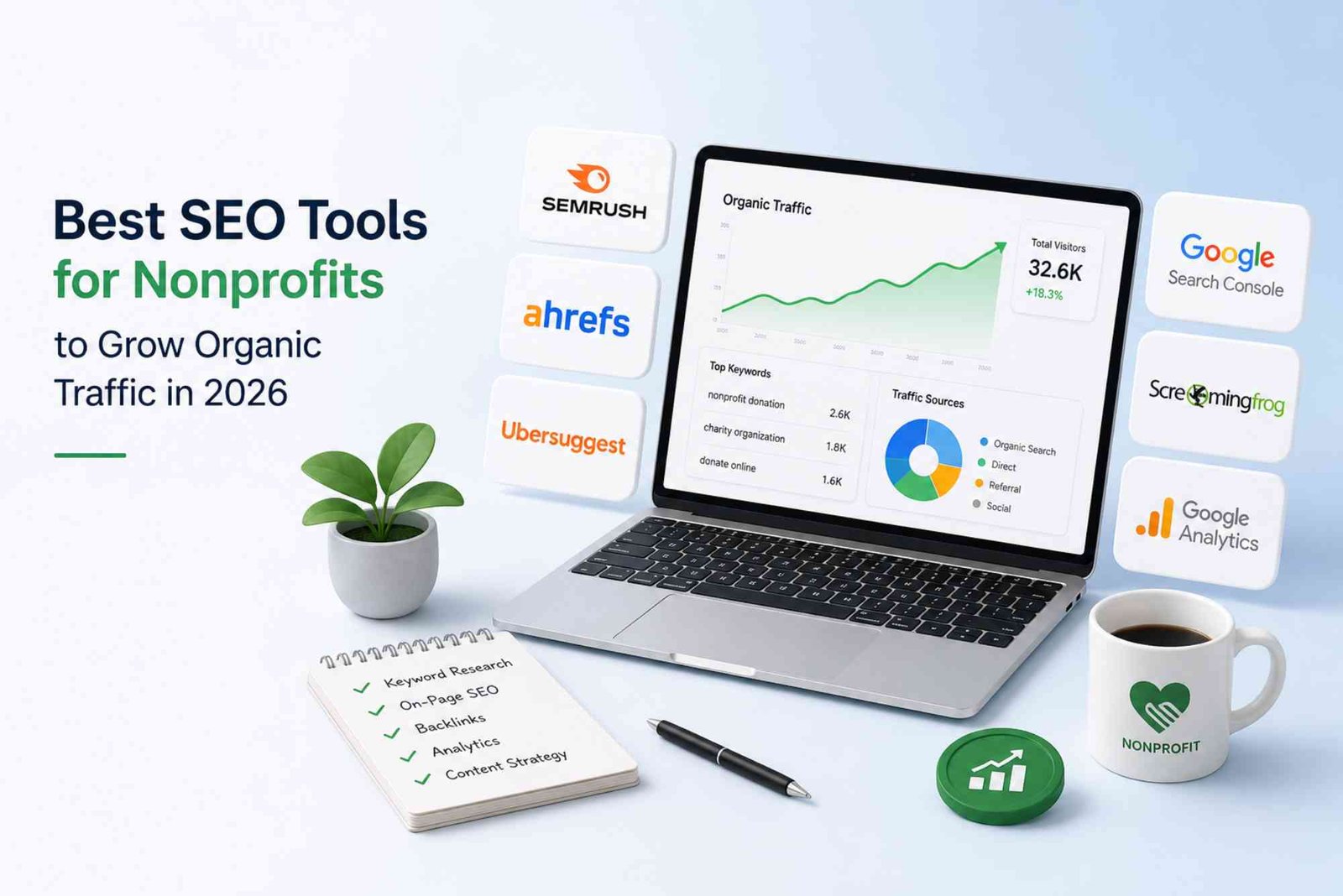
- Google Search Console provides direct insights into how a website performs in search results, helping nonprofits identify opportunities for improvement.
- Ahrefs remains a favorite for backlink analysis and competitor research, offering deep insights into how similar organizations are gaining visibility.
- SEMrush delivers a comprehensive toolkit that blends keyword research, content optimization, and site audits into one platform.
- Ubersuggest is particularly appealing for nonprofits due to its affordability and user-friendly interface.
Each of these tools offers a different lens into SEO performance, allowing nonprofits to build a well-rounded strategy that evolves with their mission.
Content Optimization: Turning Stories Into Searchable Assets
At the heart of nonprofit success lies storytelling. Whether it’s a campaign for environmental conservation or a community education initiative, the narrative must resonate. SEO tools help transform these stories into discoverable content by identifying keywords, structuring articles, and optimizing readability.
For example, aligning content with trending search queries ensures that a nonprofit’s message reaches people actively seeking related information. Platforms like Google Search Central provide valuable guidelines on how to structure content for maximum visibility, making them a critical external resource for nonprofit teams.
Interestingly, even unrelated niches—such as digital advertising strategies—can offer insights into audience behavior that nonprofits can adapt for organic growth.
Balancing Free and Premium Tools: A Strategic Approach
Budget constraints often shape the decisions nonprofits make when choosing tools. Fortunately, many SEO platforms now offer free versions that provide substantial value. However, premium tools unlock deeper insights that can accelerate growth significantly.
The decision isn’t simply about cost but about return on impact. Investing in a tool that saves time, improves targeting, and enhances visibility can ultimately lead to increased donations and engagement. In this sense, SEO tools should be viewed as mission-enablers rather than expenses.
Data-Driven Decisions: From Guesswork to Strategy
One of the most transformative aspects of modern SEO tools is their ability to replace intuition with data. Nonprofits can now track which pages attract the most visitors, which keywords drive engagement, and where users drop off. This level of insight allows organizations to refine their strategies continuously.
Rather than publishing content blindly, teams can focus on topics that resonate most with their audience. Over time, this creates a feedback loop where data informs content, and content drives further data insights.
Building Authority Through Backlinks and Partnerships
SEO isn’t just about keywords; it’s also about credibility. Backlinks from reputable websites signal trust to search engines, boosting a nonprofit’s ranking. Tools like Ahrefs and SEMrush make it easier to identify potential partnership opportunities and track backlink growth.
Collaborating with media outlets, educational institutions, and other nonprofits can amplify reach while strengthening authority. In a digital ecosystem where trust is paramount, these connections play a crucial role in long-term success.
The Role of AI in Nonprofit SEO Tools
Artificial intelligence is reshaping how SEO tools function. In 2026, many platforms incorporate AI to provide predictive insights, content suggestions, and automated optimizations. For nonprofits, this means less time spent on manual analysis and more time focusing on mission-driven work.
AI-powered tools can analyze search trends, suggest content ideas, and even optimize headlines for better engagement. This level of automation democratizes SEO, making it accessible to organizations regardless of size or technical expertise.
Conclusion: Choosing the Best SEO Tools for Nonprofits
The journey toward digital visibility is no longer reserved for large organizations with extensive budgets. With the right approach and the Best SEO Tools for Nonprofits, even small teams can achieve significant growth in organic traffic. The key lies in selecting tools that align with organizational goals, simplify complex processes, and provide actionable insights.
As nonprofits continue to navigate an increasingly digital world, SEO will remain a cornerstone of their outreach strategy. By embracing the right tools and strategies, organizations can extend their reach, amplify their voice, and ultimately create a greater impact on the communities they serve.
FAQs
What is the best free SEO tool for nonprofits?
Google Search Console is widely considered the most effective free tool, offering valuable insights into search performance and site health.
Do nonprofits need paid SEO tools?
While free tools can be sufficient initially, paid tools provide deeper insights and can significantly accelerate growth over time.
How long does SEO take to show results for nonprofits?
SEO is a long-term strategy, and noticeable improvements typically appear within three to six months depending on consistency and competition.
Can small nonprofits compete with large organizations in SEO?
Yes, by targeting niche keywords and creating high-quality content, smaller nonprofits can effectively compete in search rankings.
How often should nonprofits update their SEO strategy?
Regular reviews every few months are recommended to adapt to changing trends and ensure continued growth.
Related Reading: How Nonprofits Can Use SEO Tools to increase organic traffic without wasting time in 2026
Related Reading: Best AI SEO Tools for Nonprofits that help them grow traffic faster in 2026
Related Reading: Best SEO Audit Tools For Nonprofits that Uncover Issues Blocking Traffic Growth in 2026