
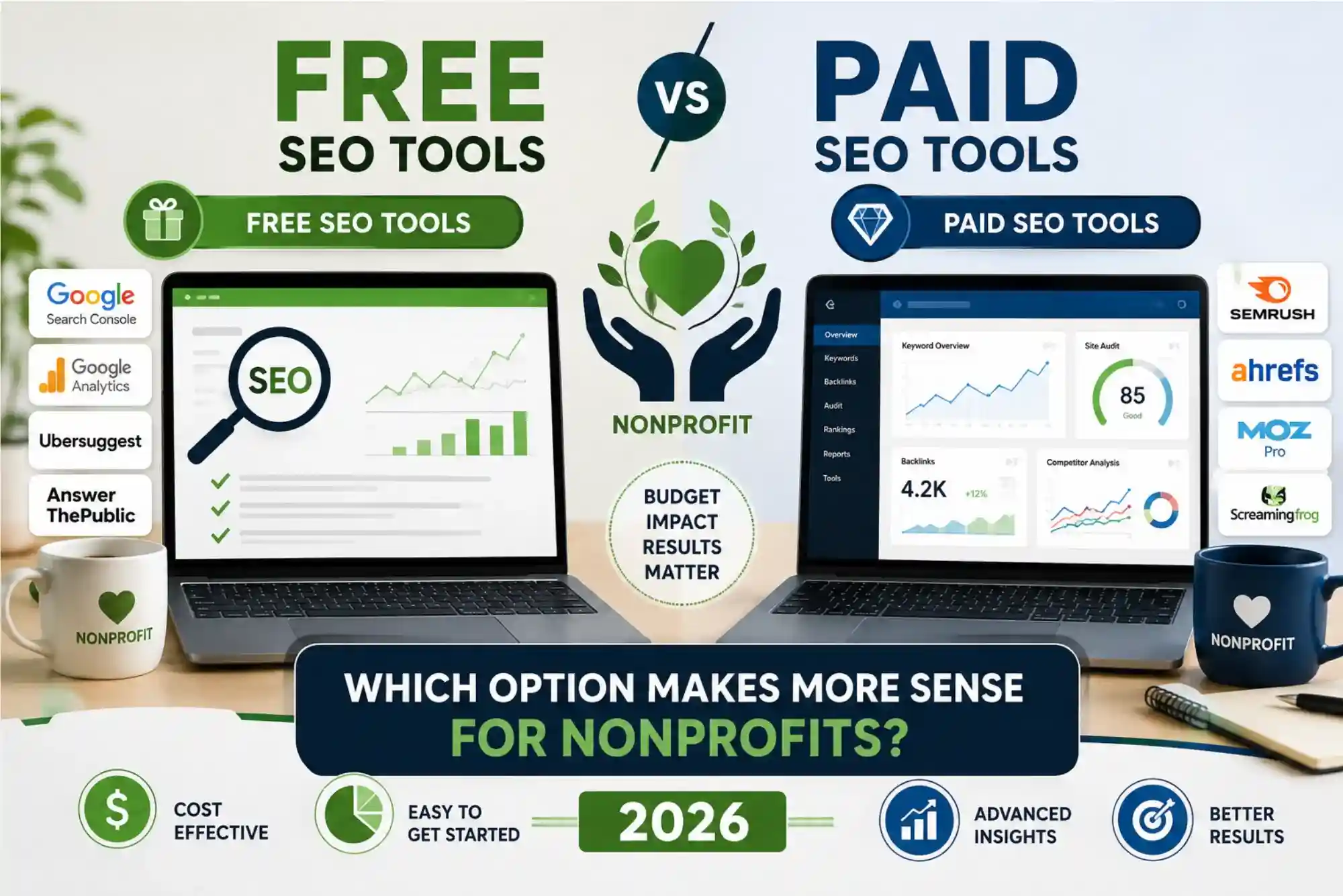
Nonprofits face a unique challenge when building their online presence. Every dollar spent on marketing is a dollar that could otherwise support programs, services, or fundraising initiatives. That reality makes choosing the right SEO tools an important decision. While free SEO tools can help organizations improve visibility without increasing expenses, paid platforms often provide deeper insights, automation, and competitive advantages.
In 2026, search engine optimization remains one of the most cost-effective ways for nonprofits to attract donors, volunteers, supporters, and community members. The question is no longer whether SEO matters, but whether free or paid SEO tools offer the better return on investment.
The answer depends on an organization’s goals, resources, team expertise, and growth expectations. Understanding the strengths and limitations of both options can help nonprofits make smarter decisions and maximize their digital impact.
Quick Answer: Should Nonprofits Use Free or Paid SEO Tools?
For small nonprofits with limited budgets and modest SEO goals, free tools are often sufficient for basic keyword research, technical monitoring, and performance tracking. However, organizations seeking significant traffic growth, competitive insights, content scaling, and advanced reporting generally benefit more from paid SEO platforms.
Many successful nonprofits adopt a hybrid approach by combining free tools with selected paid solutions as their SEO strategy matures.
Why SEO Matters More Than Ever for Nonprofits in 2026
Search engines continue to be a primary source of information for people researching causes, charities, educational resources, community services, and donation opportunities. Organizations that rank well for relevant topics can attract highly engaged visitors without paying for every click.

Effective SEO helps nonprofits:
- Increase organic website traffic
- Reach new donors and supporters
- Promote fundraising campaigns
- Build credibility and authority
- Expand community awareness
- Reduce reliance on paid advertising
Organizations that are still learning the basics may benefit from understanding which SEO tool features matter most for nonprofits before investing in premium platforms.
What Free SEO Tools Can Do for Nonprofits
Free SEO tools have improved significantly over the past few years. Many provide enough functionality for organizations that are just starting their SEO journey.
Common Capabilities of Free SEO Tools
- Keyword discovery and basic research
- Search performance monitoring
- Technical website diagnostics
- Indexing and crawl reports
- Page speed analysis
- Basic backlink monitoring
- Content optimization suggestions
These features can help nonprofits identify opportunities and fix obvious SEO issues without requiring a large financial commitment.
Advantages of Free SEO Tools
The biggest benefit is accessibility. Organizations can start improving search visibility immediately without allocating additional budget. Free platforms are also generally easier to learn and implement, making them suitable for small teams and volunteer-led marketing efforts.
Another advantage is reduced risk. Teams can experiment with SEO strategies before deciding whether more advanced solutions are necessary.
Limitations of Free SEO Tools
Despite their usefulness, free tools often come with restrictions. Data limits, fewer keyword suggestions, limited competitor analysis, and reduced reporting capabilities can make long-term growth more difficult.
Organizations attempting to scale their SEO efforts may eventually encounter limitations when conducting detailed research or monitoring large websites.
What Paid SEO Tools Offer That Free Platforms Often Cannot
Paid SEO software is designed to provide deeper insights and greater efficiency. While costs vary considerably, premium platforms typically include comprehensive datasets and advanced features that support long-term growth.
For nonprofits focused on expanding their reach, these tools can reveal opportunities that free solutions may overlook.
Advanced Features Commonly Found in Paid SEO Tools
| Feature | Free Tools | Paid Tools |
|---|---|---|
| Keyword Database Size | Limited | Extensive |
| Competitor Analysis | Basic | Advanced |
| Content Gap Research | Rare | Common |
| Backlink Analysis | Limited | Comprehensive |
| Automated Reporting | Minimal | Extensive |
| Site Audits | Basic | Detailed |
| Rank Tracking | Limited | Advanced |
These capabilities help nonprofits make data-driven decisions rather than relying on assumptions.
Better Competitive Insights
Many nonprofits compete for attention in crowded spaces. Paid platforms often allow teams to analyze competing organizations, discover content opportunities, and identify valuable keywords that drive traffic within their sector.
Organizations evaluating different solutions can also review comprehensive guides covering the best all-in-one SEO tools for nonprofits to understand which platforms offer the most value.
Cost vs Value: The Real Decision for Nonprofits
Budget concerns often dominate discussions about SEO software. However, focusing solely on subscription costs can be misleading.
The more important question is whether a tool helps the organization achieve measurable outcomes. Increased donations, volunteer signups, event registrations, and awareness campaigns can generate substantial value when supported by stronger search visibility.
A premium tool that helps a nonprofit attract hundreds of additional qualified visitors each month may ultimately produce a better return than relying exclusively on free alternatives.
When Free SEO Tools Usually Make Sense
- Small local nonprofits
- Organizations with limited marketing budgets
- New websites with modest traffic goals
- Volunteer-managed SEO efforts
- Teams learning SEO fundamentals
For these organizations, free tools often provide enough functionality to establish a solid foundation.
When Paid SEO Tools Usually Make Sense
- Growing nonprofits seeking wider reach
- Organizations managing multiple campaigns
- Teams publishing content regularly
- Websites competing in crowded niches
- Marketing departments requiring detailed reporting
As SEO becomes a larger part of the organization’s growth strategy, premium solutions frequently become more valuable.
The Hybrid Approach Many Nonprofits Prefer
One of the most practical strategies is combining free and paid tools rather than choosing only one category.
For example, a nonprofit may use free platforms for search performance monitoring while relying on a paid tool for competitor analysis, keyword research, and content planning.
This balanced approach helps organizations control costs while still gaining access to advanced capabilities where they matter most.
Teams interested in expanding their content strategy can explore guidance on keyword research tools for nonprofits to identify opportunities that support fundraising and awareness goals.
How AI Is Changing the SEO Tool Landscape
Artificial intelligence has become a major factor in SEO software development. Many modern platforms now provide AI-powered recommendations for content optimization, keyword clustering, technical audits, and workflow automation.
These features can save significant time for small nonprofit teams that lack dedicated SEO specialists.
However, AI recommendations should be treated as guidance rather than final decisions. Human expertise remains essential for creating authentic content that reflects organizational values and mission objectives.
Additional insights into emerging technologies can be found through resources discussing AI-powered SEO tools for nonprofit growth.
Key Factors to Consider Before Choosing a Tool
Before selecting free or paid SEO software, nonprofits should evaluate several important factors.
| Consideration | Questions to Ask |
|---|---|
| Budget | Can the organization sustain ongoing subscription costs? |
| Goals | Is the focus on awareness, donations, volunteers, or traffic growth? |
| Team Size | Who will manage SEO activities? |
| Website Scale | How large and complex is the website? |
| Competition | How difficult is it to rank within the sector? |
| Reporting Needs | Do stakeholders require detailed performance reports? |
Answering these questions helps organizations identify whether free solutions are sufficient or whether premium tools offer meaningful advantages.
Common Mistakes Nonprofits Make When Choosing SEO Tools
Many organizations invest in software before establishing a clear SEO strategy. Others select tools based solely on popularity without evaluating their actual needs.
Common mistakes include:
- Paying for features that are never used
- Ignoring staff training requirements
- Choosing tools without considering reporting needs
- Focusing on rankings instead of organizational outcomes
- Overlooking integration with existing workflows
Careful planning can prevent unnecessary spending and improve long-term results.
External Research and Industry Resources
Organizations seeking independent evaluations and industry benchmarks should regularly review reputable SEO publications and nonprofit marketing studies. Comprehensive educational resources can provide valuable context for tool selection and implementation. [Insert relevant reference link here]
Frequently Asked Questions
Can nonprofits succeed with only free SEO tools?
Yes. Many small nonprofits achieve meaningful organic growth using free tools, especially when they focus on quality content, technical optimization, and consistent publishing.
Are paid SEO tools worth the investment for nonprofits?
They can be worthwhile when an organization needs advanced research, competitive analysis, detailed reporting, and scalable SEO processes.
How much should a nonprofit budget for SEO tools?
There is no universal amount. The ideal budget depends on organizational goals, website size, marketing resources, and growth objectives.
Should nonprofits use AI-powered SEO tools?
AI tools can improve efficiency and provide useful recommendations, but they work best when combined with human oversight and strategic decision-making.
What is the biggest benefit of paid SEO software?
Access to larger datasets and deeper insights often allows nonprofits to make more informed decisions and uncover growth opportunities faster.
Conclusion
Choosing between free and paid SEO tools for nonprofits is not simply a budget decision. It is a strategic choice based on organizational goals, available resources, and long-term growth plans. Free tools provide an excellent starting point and can support many smaller organizations effectively. Paid platforms, however, deliver deeper analysis, greater efficiency, and stronger competitive intelligence that can accelerate results.
For many nonprofits in 2026, the most practical solution is a balanced combination of both. By leveraging free resources where appropriate and investing selectively in premium capabilities, organizations can build a sustainable SEO strategy that increases visibility, attracts supporters, and strengthens mission-driven impact over time.
Related Reading: Free vs Paid SEO Tools for Nonprofits: Which Option Makes More Sense in 2026?