Introduction
Puppy biting can make everyday walks frustrating, especially when your dog constantly grabs your ankles or pant legs. Although this behavior may seem aggressive, it is often a normal part of puppy development. Young dogs explore their surroundings with their mouths, practice playful behaviors, and react to exciting movements.
Understanding how to stop a puppy from biting ankles and pant legs during walks helps you manage this habit without creating fear or confusion. The right training approach teaches your puppy what to do instead of biting. With patience, consistency, and positive reinforcement, you can make walks calmer and more enjoyable for both of you.
Why Do Puppies Bite Ankles and Pant Legs During Walks?
Before addressing this behavior, it helps to understand what triggers it. Puppies rarely bite clothing without a reason. Their behavior often reflects excitement, frustration, teething discomfort, or an instinctive response to movement.
Natural Herding and Chasing Instincts
Some breeds, including Border Collies, Australian Shepherds, and Corgis, have strong herding instincts. They may chase moving feet and nip at trouser legs because movement triggers their natural behavior.
However, any puppy can develop this habit. Running feet, swinging clothing, and sudden movements can make your legs seem like exciting toys.
Teething and Mouth Exploration
Puppies experience teething discomfort as their adult teeth develop. Chewing helps them explore textures and relieve pressure on their gums. Unfortunately, loose trousers and moving shoelaces can become tempting targets.

Providing appropriate chew toys helps redirect this natural urge. It also teaches your puppy which objects are suitable for chewing.
Overexcitement and Tiredness
Young puppies have limited emotional control. Busy streets, unfamiliar smells, and long walks can overwhelm them quickly. When excitement becomes excessive, they may grab clothing or nip at ankles.
Tired puppies can also become unusually mouthy. Therefore, shortening walks and providing adequate rest may improve the behavior.
How to Stop a Puppy from Biting Ankles and Pant Legs During Walks
The most effective approach combines calm responses, consistent boundaries, and rewards for appropriate behavior. Avoid expecting immediate results because puppies need repeated practice to develop new habits.
Stop Moving When Your Puppy Starts Biting
When your puppy grabs your trousers, stop walking immediately. Avoid pulling your leg away because the movement may encourage chasing.
Keep your body calm and use a neutral voice. Wait briefly for your puppy to release the fabric, then redirect attention toward an appropriate toy.
Once your puppy settles, reward the calmer behavior. Resume walking when the leash is manageable and your puppy can focus again.
If the biting continues, create a brief, calm interruption. Step behind a barrier or move out of reach when it is safe. This removes the opportunity to continue the game without frightening your puppy.
Redirect Biting Toward Appropriate Toys
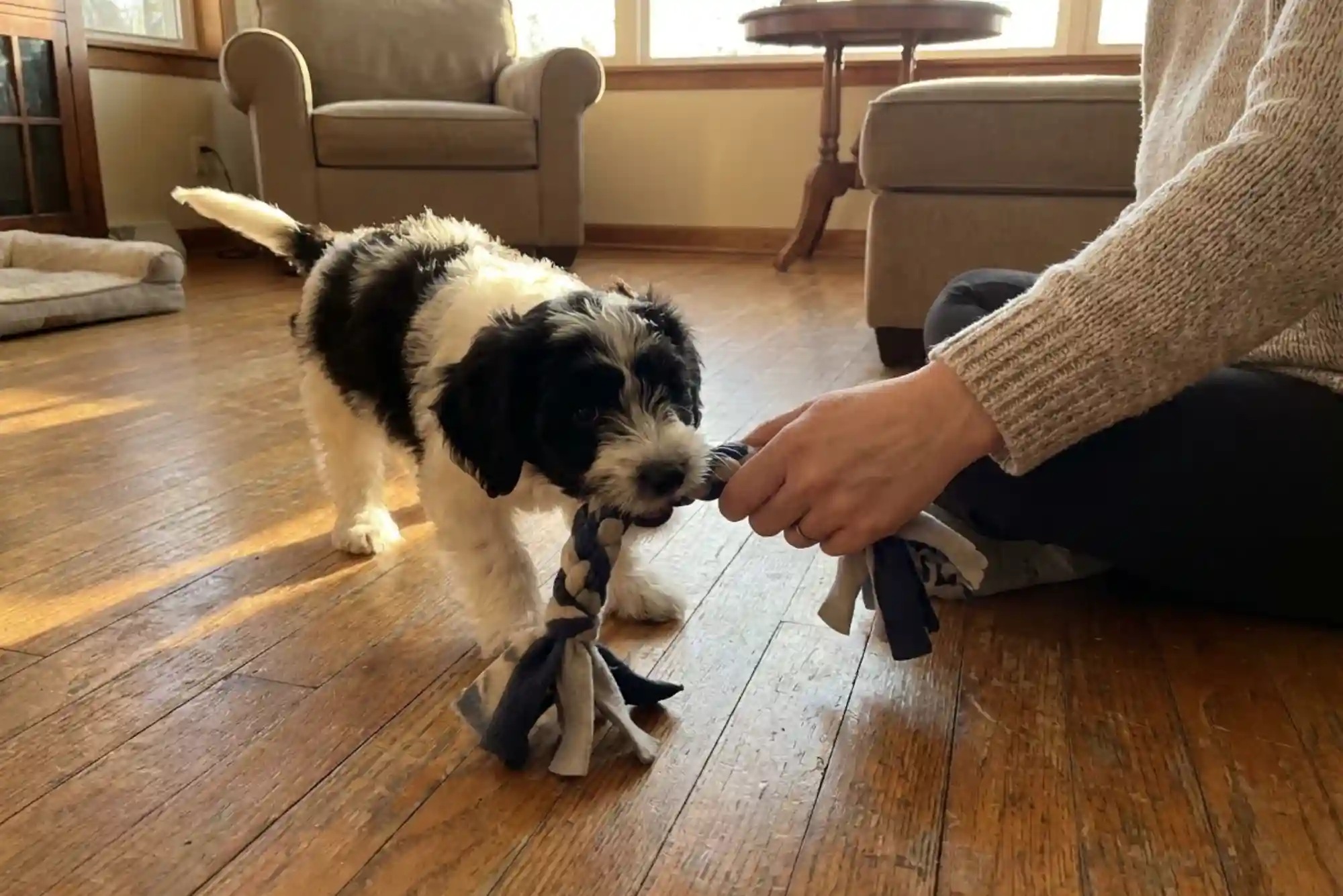
Redirection teaches puppies what they can bite instead. Carry a small tug toy or another safe, puppy-appropriate chew during walks.
When your puppy approaches your ankles, present the toy before biting begins whenever possible. Encourage your puppy to engage with it instead of your clothing.
Praise your puppy for choosing the toy. Keep the interaction controlled and avoid waving the toy around your legs, which may increase excitement.
For puppies with strong herding instincts, reward walking beside you without chasing your feet. This teaches an alternative behavior rather than simply suppressing the unwanted one.
Reward Calm Walking
Positive reinforcement helps puppies understand which behaviors earn rewards. Carry small training treats and reward your puppy for walking beside you with a loose leash.
Begin in a quiet environment with few distractions. Take several steps, reward calm movement, and gradually increase the distance.
If your puppy starts targeting your ankles, reduce the difficulty. Move to a quieter location or practice shorter walking sessions.
Consistent rewards make calm walking more rewarding than chasing clothing. Over time, your puppy learns that staying close to you brings better results.
Teach a Simple Alternative Command
Commands such as “touch,” “look,” or “let’s go” can redirect your puppy before biting starts. Choose one cue and practice it indoors first.
For example, teach your puppy to touch your hand with its nose. Reward each successful touch with a treat.
During walks, use the cue when you notice early signs of chasing or ankle targeting. Reward your puppy immediately for responding.
Avoid repeating commands continuously when your puppy is already overwhelmed. Instead, create more distance from distractions and help your puppy regain focus.
What to Do When Your Puppy Grabs Your Pants and Refuses to Let Go
Some puppies grip fabric firmly and become more excited when their owners try to remove it. Pulling the clothing can turn the situation into a tug-of-war.
Stay calm and avoid jerking your leg or shouting. If possible, hold still and offer a treat or suitable toy to encourage your puppy to release the fabric.
Reward the release, then calmly redirect your puppy. If necessary, use a barrier to separate yourself without dragging or lifting the puppy by its collar.
Never punish your puppy physically or force its mouth open unless an immediate safety emergency requires intervention. Rough handling can increase fear and make biting more difficult to manage.
If the behavior repeatedly causes injuries or your puppy cannot disengage, consult a qualified reward-based trainer. A veterinarian can also assess possible discomfort or other contributing issues.
How to Prevent Puppy Biting Before Walks
Prevention can make training easier because it reduces situations that trigger unwanted behavior. A well-prepared puppy is generally better able to learn during outdoor activities.
Provide Exercise and Mental Stimulation
Puppies need appropriate physical activity and mental enrichment. However, excessive exercise can increase tiredness and mouthiness rather than improve behavior.
Choose walks suitable for your puppy’s age, breed, health, and vaccination status. Include opportunities to sniff, explore, and investigate the environment safely.
Short training games and food puzzles can also provide mental stimulation. A balanced routine helps prevent boredom without overexerting a growing puppy.
Practice Walking Indoors First
Before tackling busy streets, practice leash walking inside your home or in a quiet enclosed area. Reward your puppy for following you without grabbing clothing.
Gradually introduce mild distractions as your puppy improves. This progression builds confidence and makes outdoor training more manageable.
If biting begins frequently, return to an easier environment. Successful repetition matters more than completing a particular distance.
Choose Suitable Clothing and Equipment
Loose, flowing trousers may attract puppies that enjoy chasing movement. During training, consider wearing comfortable clothing that is less likely to flap around your legs.
Use a properly fitted harness and a standard leash that allows safe control. Avoid equipment that causes pain or restricts breathing.
Equipment alone will not eliminate biting. It should support a consistent training plan rather than replace teaching and rewarding appropriate behavior.
Common Mistakes That Make Puppy Biting Worse
Certain reactions unintentionally reinforce ankle biting. Recognizing these mistakes helps you respond more effectively.
Chasing your puppy or running away may encourage the dog to pursue your feet. Shouting can also increase excitement or create anxiety.
Pushing your puppy away with your hands may become another form of play. Similarly, waving clothing or repeatedly pulling your trousers can reward the behavior with movement.
Inconsistent responses create confusion. If biting sometimes starts a game and sometimes ends the walk, your puppy may continue testing different reactions.
Instead, respond calmly and consistently. Stop the movement, redirect biting, and reward appropriate behavior whenever possible.
How Long Does It Take to Stop Puppy Ankle Biting?
The timeline depends on your puppy’s age, temperament, previous experiences, and training consistency. Some puppies improve within several training sessions, while others need weeks of repeated practice.
Progress rarely follows a perfectly straight line. Teething, unfamiliar environments, and developmental changes can temporarily increase mouthiness.
Track improvements rather than expecting instant perfection. Notice whether biting happens less frequently, stops sooner, or becomes easier to redirect.
Seek professional help if biting escalates, breaks skin repeatedly, appears associated with guarding or fear, or remains difficult to manage despite consistent training. Sudden behavioral changes also warrant veterinary attention.
Frequently Asked Questions
Why does my puppy bite my ankles when I walk?
Puppies often bite ankles because moving feet trigger chasing and play instincts. Teething, excitement, frustration, and tiredness can also contribute. Identifying the trigger helps you choose an appropriate training response.
How do I stop my puppy from biting my pants immediately?
Stop moving and remain calm when your puppy grabs your pants. Avoid pulling the fabric or turning the interaction into a game. Encourage your puppy to release it with a suitable toy or treat, then reward calm behavior.
Should I punish my puppy for biting my legs?
No. Physical punishment, shouting, and intimidation can increase fear or excitement. Reward-based training provides clearer guidance by teaching puppies which behaviors are appropriate.
Why does my puppy bite my ankles during walks but not at home?
Outdoor environments contain more movement, smells, and distractions. These can trigger chasing instincts or overwhelm a puppy that behaves calmly indoors. Begin training in quiet areas and gradually introduce more challenging environments.
Will my puppy grow out of ankle biting?
Many puppies become less mouthy as they mature, particularly when their owners teach appropriate alternatives. However, herding instincts and reinforced chasing habits may persist without training. Consistent practice helps prevent the behavior from becoming an established habit.
Conclusion
Learning how to stop a puppy from biting ankles and pant legs during walks requires patience, consistency, and an understanding of your dog’s needs. Most importantly, avoid turning the behavior into a game or responding with punishment.