
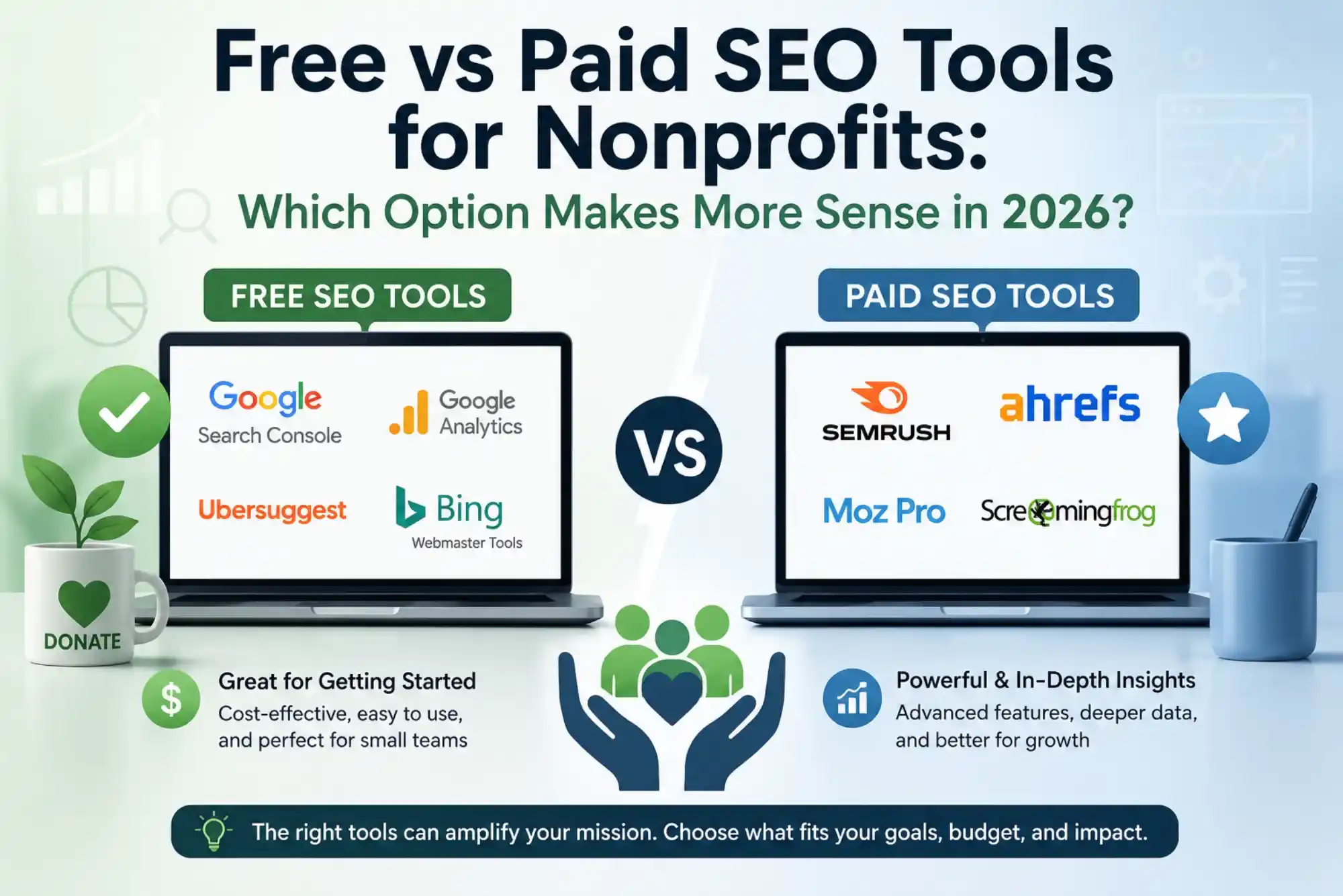
Search visibility has become one of the most valuable assets for nonprofit organizations. As competition for online attention increases, charities, foundations, and community organizations are investing more effort into attracting supporters through organic search. One of the biggest decisions nonprofits face is whether free SEO tools are enough or whether paid platforms deliver enough value to justify the cost.
The answer depends on goals, resources, and growth expectations. While free SEO tools can provide a solid foundation for basic optimization, paid solutions often unlock deeper insights, automation, and competitive intelligence. Understanding where each option excels helps nonprofits allocate their limited budgets more effectively and maximize the impact of their digital marketing efforts.
For most organizations, the best choice is not always free or paid exclusively. Instead, the most effective strategy often combines both approaches to balance affordability and performance.
Understanding the Role of SEO Tools for Nonprofits
SEO tools help organizations improve their visibility in search engines, identify content opportunities, monitor rankings, analyze competitors, and fix technical issues that may limit website performance. For nonprofits, these capabilities can directly support fundraising campaigns, volunteer recruitment, awareness initiatives, and community outreach.
Organizations new to search optimization can benefit from understanding which SEO tool features matter most for nonprofits before evaluating different platforms. The right tool should align with the organization’s objectives rather than simply offering the largest collection of features.
Search Intent Behind This Topic
People searching for free versus paid SEO tools are typically conducting commercial investigation. They want to compare available options, understand the benefits and limitations of each approach, and determine whether investing in premium software will generate measurable returns.

This audience often includes:
- Nonprofit marketing managers
- Fundraising teams
- Communications directors
- Volunteer-led organizations
- Small charities with limited budgets
- Growing nonprofits evaluating technology investments
Free SEO Tools: Benefits and Limitations
Free SEO tools remain an attractive option for nonprofits because they eliminate software expenses while providing valuable data. Many organizations successfully build an initial SEO strategy using free resources alone.
Advantages of Free SEO Tools
- No financial commitment
- Ideal for small teams and beginners
- Easy access to basic SEO data
- Suitable for content optimization and performance monitoring
- Helpful for learning SEO fundamentals
Free tools often provide enough information to monitor website performance, identify indexing issues, review search queries, and optimize existing content.
Many organizations begin with free platforms before exploring more advanced solutions. Those seeking affordable alternatives may also benefit from reviewing budget-friendly SEO tools designed for nonprofits that offer premium capabilities without enterprise-level pricing.
Limitations of Free SEO Tools
Despite their usefulness, free tools typically include restrictions that can limit long-term growth. Data availability may be capped, historical reporting may be limited, and advanced competitor research features are often unavailable.
Common limitations include:
- Restricted keyword data
- Limited backlink analysis
- Minimal competitor intelligence
- Reduced reporting capabilities
- Lower automation options
- Usage limits and daily quotas
As a nonprofit grows its digital presence, these restrictions can create obstacles when trying to scale SEO campaigns.
Paid SEO Tools: Benefits and Challenges
Paid SEO platforms are designed for organizations that need deeper insights, broader datasets, and advanced workflow capabilities. They can dramatically improve efficiency for teams managing multiple campaigns or larger websites.
Advantages of Paid SEO Tools
Premium solutions provide access to extensive keyword databases, backlink monitoring, technical audits, competitor research, content optimization recommendations, and performance reporting.
Key benefits include:
- Comprehensive keyword research
- Advanced competitor analysis
- Detailed backlink tracking
- Technical SEO monitoring
- Automated reporting
- Scalable workflow management
- Historical performance data
Organizations that publish content regularly often discover significantly more opportunities through premium research tools than through free alternatives.
Challenges of Paid SEO Tools
The most obvious drawback is cost. Nonprofits frequently operate under budget constraints, making software subscriptions difficult to justify.
Additional challenges may include:
- Training requirements
- Feature complexity
- Data overload for small teams
- Subscription management
- Potential overlap with existing tools
Without a clear SEO strategy, organizations may end up paying for features they rarely use.
Comparing Free and Paid SEO Tools
| Factor | Free SEO Tools | Paid SEO Tools |
|---|---|---|
| Cost | No subscription fees | Monthly or annual fees |
| Keyword Research | Basic insights | Extensive databases and trends |
| Technical Audits | Limited diagnostics | Comprehensive site analysis |
| Competitor Research | Minimal data | Advanced competitive intelligence |
| Reporting | Basic reporting | Custom automated reports |
| Scalability | Suitable for small websites | Ideal for growing organizations |
| Backlink Analysis | Limited visibility | Detailed backlink tracking |
When Free SEO Tools Are Enough
Many nonprofits can achieve meaningful results using free resources, especially during the early stages of website growth.
Free tools may be sufficient when:
- The website is relatively small
- Content publishing is infrequent
- The organization has limited marketing resources
- SEO is not yet a primary growth channel
- Basic performance monitoring meets current needs
Smaller charities focused on local outreach or niche audiences often find that free platforms provide enough information to guide content creation and monitor visibility.
When Paid SEO Tools Become Worth the Investment
Organizations pursuing aggressive growth goals often reach a point where premium tools become valuable rather than optional.
Paid solutions typically make sense when:
- Organic traffic is a major acquisition channel
- Content publishing occurs regularly
- Multiple team members contribute to SEO
- Competitor analysis is important
- Detailed reporting is required for leadership
- Technical SEO issues are affecting performance
For example, nonprofits seeking to expand nationally may require deeper keyword intelligence than free tools can provide. Comprehensive research capabilities can reveal untapped opportunities and emerging trends.
Teams focusing heavily on content strategy should also explore the methods discussed in this guide to keyword research tools for nonprofits, as content planning often determines long-term SEO success.
The Hidden Cost of Using Only Free Tools
Although free software eliminates direct expenses, organizations should also consider opportunity costs. Missing keyword opportunities, failing to identify technical issues, or lacking competitor insights can slow growth and reduce visibility.
In some cases, the time spent manually gathering data from multiple free tools can exceed the cost of a premium platform that consolidates information into a single dashboard.
This is especially important for nonprofits operating with small teams where staff time is already stretched across multiple responsibilities.
Technical SEO and Audit Capabilities
Technical SEO has become increasingly important as search engines place greater emphasis on user experience, page performance, indexing quality, and website structure.
While free tools can identify some issues, paid platforms often provide much deeper analysis. They can uncover crawl errors, duplicate content, broken links, structured data problems, and performance bottlenecks.
Organizations interested in strengthening technical performance should review advanced SEO audit tools for nonprofits that specialize in diagnosing issues that may limit organic growth.
Additional best practices and industry standards can also be reviewed through trusted SEO resources such as [Insert relevant reference link here].
A Hybrid Approach Often Delivers the Best Results
For many nonprofits, the smartest strategy is combining free and paid resources. This approach allows organizations to maintain budget efficiency while gaining access to advanced capabilities where they matter most.
A practical hybrid setup might include:
- Free tools for performance monitoring and indexing insights
- Paid keyword research software for content planning
- Premium audit tools for periodic technical reviews
- Advanced reporting platforms for leadership updates
This balance helps organizations maximize ROI while avoiding unnecessary software expenses.
Factors to Consider Before Choosing
Before selecting any SEO tool, nonprofits should evaluate their specific requirements rather than focusing solely on price.
| Consideration | Questions to Ask |
|---|---|
| Budget | Can the organization sustain recurring software costs? |
| Team Size | Who will use the tool and manage SEO activities? |
| Growth Goals | How important is organic traffic to future success? |
| Website Complexity | Does the site require advanced technical monitoring? |
| Reporting Needs | Are detailed performance reports necessary? |
| Content Volume | How frequently is new content published? |
Frequently Asked Questions
Are free SEO tools good enough for small nonprofits?
Yes. Many small nonprofits can successfully use free tools to monitor performance, improve content, and address basic SEO issues, particularly during the early stages of growth.
Do paid SEO tools improve rankings automatically?
No. Paid tools provide better data and insights, but rankings improve only when organizations implement effective SEO strategies based on that information.
What is the biggest advantage of paid SEO software?
The primary advantage is access to deeper data, including advanced keyword research, competitor analysis, backlink tracking, and technical auditing capabilities.
Should nonprofits invest in SEO before paid advertising?
That depends on organizational goals. SEO typically delivers long-term value and sustainable traffic, while paid advertising often generates faster but temporary results.
Can nonprofits combine free and paid SEO tools?
Absolutely. Many successful organizations use a mix of free and premium solutions to balance cost efficiency with advanced functionality.
Conclusion
The debate around Free vs Paid SEO Tools for Nonprofits is not about identifying a universal winner. Instead, it is about choosing the right solution for an organization’s current stage, objectives, and available resources. Free tools remain highly valuable for monitoring performance and building foundational SEO practices. Paid platforms, however, offer deeper insights, stronger competitive intelligence, and scalability that can accelerate growth.
For nonprofits aiming to expand visibility, attract supporters, and strengthen digital outreach in 2026, a thoughtful combination of free and paid SEO tools often delivers the most practical and cost-effective path to sustainable organic growth.
Related Reading: Free vs Paid SEO Tools for Nonprofits: Which Option Makes More Sense in 2026?
Related Reading: Best All-in-One SEO Tools for Nonprofits in 2026: What to Use and Why