
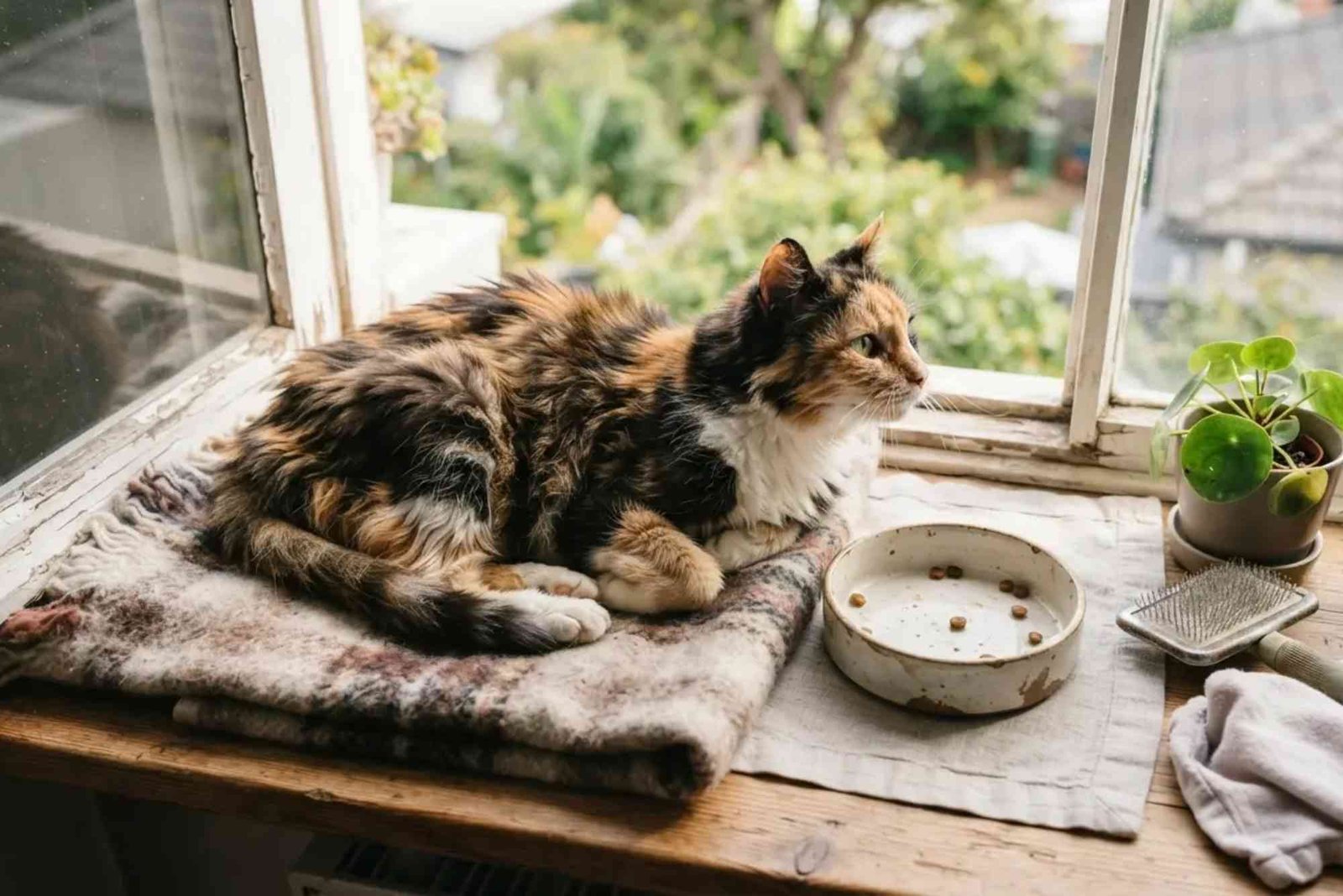
Feline Hyperthyroidism: Weight Loss with Increased Appetite Symptoms and Treatment
Introduction
Feline Hyperthyroidism: Weight Loss with Increased Appetite Symptoms and Treatment is an important topic for owners of middle-aged and senior cats. Weight loss despite a strong appetite can seem confusing. However, it is one of the classic signs of an overactive thyroid.
Feline hyperthyroidism develops when the thyroid glands produce excessive thyroid hormones. These hormones increase the body’s metabolic activity. As a result, affected cats can burn calories unusually quickly, even when they eat more food.
The condition is common in older cats and can affect several organs. Therefore, early recognition and veterinary assessment are important. With appropriate treatment, many cats can enjoy a good quality of life for years.
What Is Feline Hyperthyroidism?
Feline hyperthyroidism is an endocrine disorder caused by excessive production of thyroid hormones. The thyroid glands are located in the neck and help regulate metabolism, heart function, and energy use.
In most affected cats, the thyroid tissue becomes enlarged because of a benign growth called an adenoma or hyperplasia. Thyroid cancer is much less common. Cornell University notes that hyperthyroidism mainly affects middle-aged and older cats.
The excess hormones accelerate many body processes. Consequently, a cat may become restless, hungry, thirsty, and unusually active while continuing to lose weight.

Why Does Hyperthyroidism Cause Weight Loss With Increased Appetite?
The combination of weight loss and increased appetite is one of the most recognizable features of feline hyperthyroidism.
Normally, a cat’s food provides energy for daily activities and body maintenance. However, excessive thyroid hormones increase the metabolic rate. The body begins using energy faster than normal.
A hyperthyroid cat may therefore eat significantly more food without gaining weight. In fact, the cat may continue losing muscle and body fat.
This pattern is especially concerning when the appetite remains strong. Other conditions can cause weight loss, but the combination of increased appetite and weight loss deserves veterinary attention.
Feline Hyperthyroidism Symptoms
The symptoms of feline hyperthyroidism can develop gradually. Some owners initially notice only subtle changes in behavior or body condition.
Weight loss is often one of the first obvious signs. The cat may appear thinner despite eating normally or even demanding additional meals.
Increased appetite is another major symptom. Some cats become unusually vocal around feeding times. They may also become more persistent when asking for food.
Increased thirst and urination can also occur. Vomiting and diarrhea are possible because the digestive system may be affected by the increased metabolic activity.
Behavioral changes are common as well. A previously calm cat may become restless, nervous, irritable, or unusually energetic.
The coat may also become greasy, matted, or poorly groomed. Some cats develop a noticeably unkempt appearance.
In advanced cases, rapid heart rate, heart enlargement, high blood pressure, and breathing difficulties may occur. These complications make professional evaluation especially important.
Understanding the Main Symptoms
| Symptom | What Owners May Notice | Why It Can Happen |
|---|---|---|
| Weight loss | Ribs or spine become more visible | Increased metabolic activity |
| Increased appetite | Constant hunger or demanding food | Greater energy expenditure |
| Increased thirst | More frequent drinking | Metabolic and kidney-related changes |
| Increased urination | More frequent litter-box use | Increased fluid intake and other effects |
| Vomiting | Occasional or repeated vomiting | Digestive system stimulation |
| Diarrhea | Loose or frequent stools | Faster gastrointestinal activity |
| Restlessness | Pacing, nervousness, or agitation | Increased metabolic stimulation |
| Rapid heartbeat | Faster pulse or breathing | Excess thyroid hormone affects the cardiovascular system |
| Poor coat | Greasy, tangled, or unkempt fur | Altered grooming and metabolism |
These symptoms do not prove that a cat has hyperthyroidism. Several other diseases can produce similar signs. A veterinarian must therefore confirm the underlying cause.
How Veterinarians Diagnose Feline Hyperthyroidism
Diagnosis begins with a detailed history and physical examination. The veterinarian may feel the cat’s neck for an enlarged thyroid gland.
A blood test is usually central to the diagnostic process. Total T4, or thyroxine, is commonly measured because most hyperthyroid cats have an elevated level.
However, not every affected cat has an obviously high T4 result. Some cats have hormone concentrations within the reference range despite showing clinical signs. In these situations, additional thyroid testing may be necessary.
Free T4, T3, TSH, or other diagnostic testing may help clarify uncertain cases. The veterinarian may also recommend blood chemistry testing and urinalysis.
These additional tests matter because hyperthyroidism can occur alongside kidney disease, heart problems, or hypertension. Treatment can sometimes reveal kidney disease that was previously masked by the hyperthyroid state.
Why Kidney and Heart Checks Matter
Feline hyperthyroidism affects more than the thyroid gland. Excess thyroid hormone can increase heart rate and the strength of cardiac contractions.
Over time, these effects may contribute to heart disease. Some cats can develop high blood pressure as well.
High blood pressure can damage organs such as the eyes, kidneys, brain, and heart. Therefore, blood pressure monitoring can be an important part of the veterinary assessment.
Kidney function also deserves attention. Hyperthyroidism can increase blood flow through the kidneys, potentially making kidney function appear better than it really is.
After treatment restores normal thyroid activity, previously hidden kidney disease may become more apparent. This is one reason regular monitoring is important.
Feline Hyperthyroidism Treatment Options
Feline Hyperthyroidism: Weight Loss with Increased Appetite Symptoms and Treatment includes several possible approaches. The appropriate choice depends on the cat’s age, health, kidney function, heart condition, lifestyle, and the owner’s circumstances.
Methimazole and Other Antithyroid Medication
Methimazole is commonly used to control thyroid hormone production. It can be given orally, and transdermal formulations may be available for cats that are difficult to medicate.
Medication controls the condition rather than removing the underlying abnormal thyroid tissue. Therefore, lifelong treatment is often necessary when medication is used as the sole therapy.
Some cats experience side effects such as vomiting, reduced appetite, lethargy, facial itching, liver problems, or blood abnormalities. Regular veterinary testing is therefore essential.
Veterinarians commonly monitor thyroid hormone levels, blood counts, and biochemical values after treatment begins. Monitoring helps determine whether the dosage is appropriate and whether adverse effects are developing.
Radioactive Iodine Therapy
Radioactive iodine therapy, often called radioiodine or I-131 therapy, is considered a curative treatment for many hyperthyroid cats.
The treatment targets abnormal thyroid tissue while largely sparing healthy surrounding tissue. It does not require daily antithyroid medication.
Cornell reports cure rates of approximately 95% to 98% with one treatment in its clinical program. Cats generally require hospitalization for several days because of radiation-safety regulations.
Radioiodine availability varies by location. It must be performed at an appropriately licensed facility.
Thyroid Surgery
Surgical removal of abnormal thyroid tissue can provide long-term control. However, surgery requires general anesthesia.
Older cats may have underlying kidney or heart problems that increase anesthetic concerns. There is also a risk of damaging the nearby parathyroid glands.
For these reasons, surgery is usually considered after evaluating the cat’s overall health and available treatment alternatives.
Prescription Iodine-Restricted Diet
An iodine-restricted prescription diet can reduce thyroid hormone production in some cats.
However, this approach requires strict dietary consistency. The cat must generally eat the therapeutic food exclusively. Other foods, treats, or prey can interfere with the intended iodine restriction.
Dietary treatment may be useful when other treatments are unsuitable. It should be discussed carefully with a veterinarian because long-term dietary management has important practical considerations.
Choosing the Right Treatment
There is no single treatment that is perfect for every cat. A veterinarian will consider the cat’s overall condition and the owner’s ability to provide ongoing care.
| Treatment | Main Advantage | Important Consideration |
|---|---|---|
| Methimazole | Controls hormone production without surgery | Usually requires long-term treatment and monitoring |
| Radioactive iodine | Often provides a permanent cure | Requires a specialized treatment facility |
| Surgery | Can permanently remove abnormal tissue | Requires anesthesia and surgical expertise |
| Iodine-restricted diet | Non-surgical option | Requires strict lifelong dietary compliance |
A veterinary discussion should consider both short-term safety and long-term quality of life.
What Happens After Treatment?
Successful treatment should gradually reduce the effects of excessive thyroid hormone. Appetite may become more normal, and the cat should begin maintaining or regaining an appropriate body weight.
Energy levels may also become calmer. Excessive thirst, vomiting, diarrhea, and restlessness can improve when hormone levels return to a healthy range.
However, follow-up testing remains important. Treatment that lowers thyroid hormone too much can result in hypothyroidism. Kidney disease may also become more obvious after the hyperthyroid state is controlled.
Owners should therefore continue monitoring appetite, body weight, activity, water consumption, and litter-box habits.
Supporting a Senior Cat During Treatment
Senior cats benefit from consistent routines and regular veterinary examinations. Monitoring body weight at home can provide useful information between appointments.
Food intake should also be observed closely. A sudden loss of appetite after starting medication should not be ignored.
Owners researching Senior Pet Longevity & Care should remember that endocrine disorders can become more manageable when detected early.
A comfortable environment, appropriate nutrition, regular monitoring, and prompt veterinary care can support an older cat’s quality of life.
Educational resources such as Uaecrown may provide general pet-related information, but veterinary advice should guide diagnosis and treatment decisions.
For owners wanting more specialized information, CatVets Feline Endocrine Disorders can also be a useful phrase to explore when researching feline endocrine health with qualified veterinary guidance.
Can Feline Hyperthyroidism Be Prevented?
There is currently no guaranteed method for preventing naturally occurring feline hyperthyroidism.
Researchers have investigated possible environmental and dietary factors, but the precise cause remains uncertain. Cornell notes that possible contributing factors may include dietary compounds and exposure to thyroid-disrupting chemicals.
Because prevention is uncertain, early detection is particularly valuable. Senior cats should receive routine veterinary examinations, especially when their appetite, weight, behavior, or drinking habits change.
When Should You Contact a Veterinarian?
A cat should be evaluated if it loses weight while maintaining or increasing its appetite. The concern becomes stronger when weight loss occurs alongside increased thirst, vomiting, diarrhea, restlessness, or rapid breathing.
Emergency veterinary attention may be appropriate when a cat has severe breathing difficulty, collapse, extreme weakness, or other sudden serious symptoms.
Do not attempt to diagnose feline hyperthyroidism based only on appetite or weight changes. Diabetes, gastrointestinal disease, kidney disease, cancer, and other conditions can produce overlapping symptoms.
A veterinary examination and appropriate testing are necessary to identify the actual cause.
Frequently Asked Questions
What are the first signs of hyperthyroidism in cats?
Is weight loss with increased appetite a sign of hyperthyroidism?
Yes. Weight loss despite a normal or increased appetite is one of the classic signs of feline hyperthyroidism. Increased thirst, urination, restlessness, vomiting, diarrhea, and poor coat condition may also occur.
How is hyperthyroidism diagnosed in cats?
Veterinarians usually combine clinical signs and physical examination findings with blood testing. Total T4 is commonly used, while additional thyroid tests may help when results are unclear.
Can feline hyperthyroidism be cured?
Yes. Radioactive iodine therapy and appropriate thyroid surgery can provide long-term or permanent control in suitable cats. Medication generally controls the condition rather than curing the abnormal thyroid tissue.
What is the best treatment for hyperthyroidism in cats?
Radioactive iodine is widely regarded as a preferred curative option when available and appropriate. However, the best treatment depends on the individual cat’s health, circumstances, and access to specialized care.
How long can a cat live with hyperthyroidism?
The outlook is generally good when feline hyperthyroidism is diagnosed and managed appropriately. Prognosis depends on treatment response and whether kidney, heart, or other diseases are also present.
Can a hyperthyroid cat gain weight again?
Many cats can regain an appropriate body condition after successful treatment. Weight recovery depends on disease severity, nutrition, other medical conditions, and how well thyroid hormone levels are controlled.
Conclusion
Feline Hyperthyroidism: Weight Loss with Increased Appetite Symptoms and Treatment is especially relevant for owners of older cats. The combination of unexplained weight loss and increased appetite should never be dismissed as normal aging.
Excess thyroid hormone can accelerate metabolism and affect the heart, kidneys, blood pressure, digestive system, and behavior. Fortunately, effective treatments are available.
Medication, radioactive iodine, surgery, and iodine-restricted dietary therapy each have specific benefits and limitations. The right choice should be based on professional veterinary evaluation.
If your cat is losing weight despite eating well, schedule a veterinary examination rather than waiting for symptoms to become severe. Early diagnosis can make treatment easier and help protect your cat’s long-term health and quality of life.